European Governments Push For Sovereign Satellite Capabilities After U.S. Access Restrictions
Executives and officials at a Paris space conference said European demand for sovereign satellite capacity is rising, driven by U.S. access restrictions, cheaper New Space hardware and a scramble for launch slots.
European governments are increasingly seeking sovereign satellite capabilities, executives and policy makers said at an industry conference in Paris, according to Defense News. They linked the trend to U.S. restrictions on satellite access in Ukraine and the Middle East, which they said exposed the risk of dependence.
Sovereignty was a recurring theme at World Space Business Week, held from Sept. 14 to 17, and at the two-day Space Defense & Security Summit alongside it. U.S. companies stressed that they can build satellites in Europe or operate without International Traffic in Arms Regulations constraints. European companies emphasized that they can supply local customers with complete satellite systems.
Noam Segal, chief executive of Israel's ImageSat International, said many defense customers want sovereignty because any of them could end up in a geopolitical situation where a supplier cannot deliver. The war in Ukraine showed how important satellite data is on the battlefield and how heavily Western militaries rely on U.S. suppliers. The outlet listed restrictions on Starlink access in Ukraine, a halt in U.S. intelligence sharing with Ukraine in March 2025 and imagery restrictions over the Middle East in 2026 as factors pushing European countries toward sovereign alternatives.
The move from a government-dominated space sector to a private one that has lowered the cost of launchers and satellites, lets European governments pursue sovereignty even on relatively small budgets. Industry consultancy Novaspace, which organized the conferences, expects the number of defense intelligence, surveillance and reconnaissance satellites to grow more than fourfold through 2035.
Vincent Dedieu, CEO of Sodern, a unit of France's ArianeGroup, called New Space an incredible opportunity for countries without a space industry. He said Sodern is working with Poland, Bulgaria and Finland, which are using it to catch up in defense and commercial space. Segal said that because customers can now own space assets at a completely different cost point, the push for sovereign capabilities is a strong trend that will last.
Executives at U.S.-based geospatial intelligence firms, including Planet Labs, BlackSky and Vantor, said their satellites can be delivered free of ITAR restrictions. Several highlighted their European presence or their ability to manufacture satellites outside the United States. HawkEye 360 CEO John Serafini said partnerships with Italy's Leonardo and Czechia's ERA, along with a Luxembourg subsidiary, make him confident that the company can meet the needs of European militaries however they want sovereignty delivered.
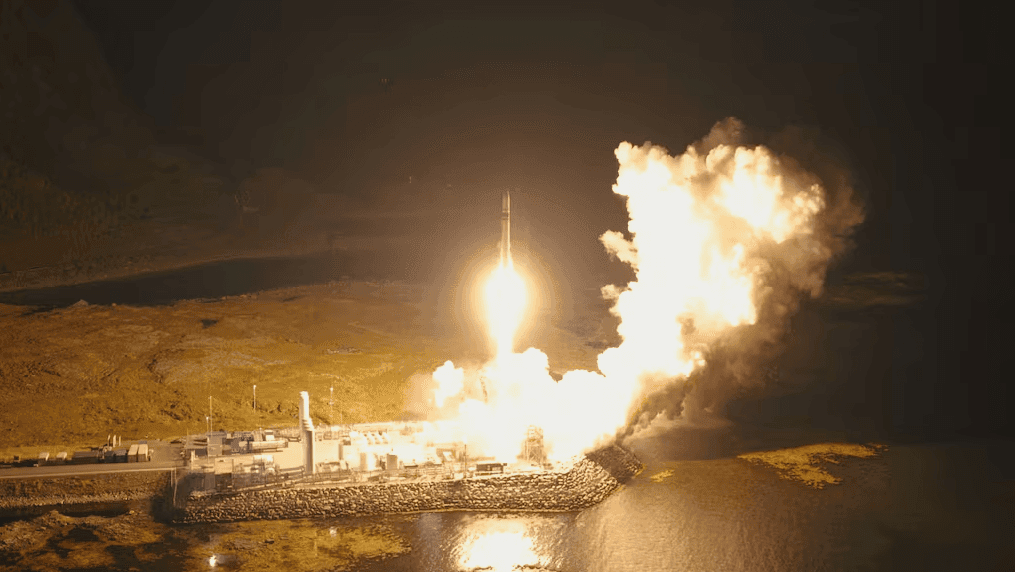
Planet Labs opened a new facility in Berlin in September 2026. Co-founder and Chief Strategy Officer Robbie Schingler said the company's first German-built Pelican satellite is due to leave the production line by the end of 2026. It is then expected to be launched on a German-built Isar Aerospace rocket from Norway sometime in early 2027.
Finland's ICEYE, according to CEO Rafal Modrzewski, is taking sovereignty to a different level for a German order covering a 40-satellite constellation. The company is setting up a manufacturing site in western Germany controlled by a German-owned entity and is keeping the whole supply chain within the country. Modrzewski said this requires an order large enough to justify the investment.
François Lombard, head of connected intelligence at Airbus Defence and Space, said he is optimistic about new European providers of launchers able to lift one-ton payloads to LEO. He cited a successful launch by Germany's Isar Aerospace and said ArianeGroup's MaiaSpace is coming to market pretty soon. Lombard said some satellites cannot be launched from other continents, so sovereign, competitive access to space for this class of satellite matters.