F-35C Makes First Arrested Landing On A Ford Class Carrier Aboard Future USS John F. Kennedy
A U.S. Navy F-35C trapped aboard the future USS John F. Kennedy (CVN 79) on Oct. 13, 2026, a first for the type on a Ford class carrier. Testing continues, including an EMALS launch, before the jet is cleared.
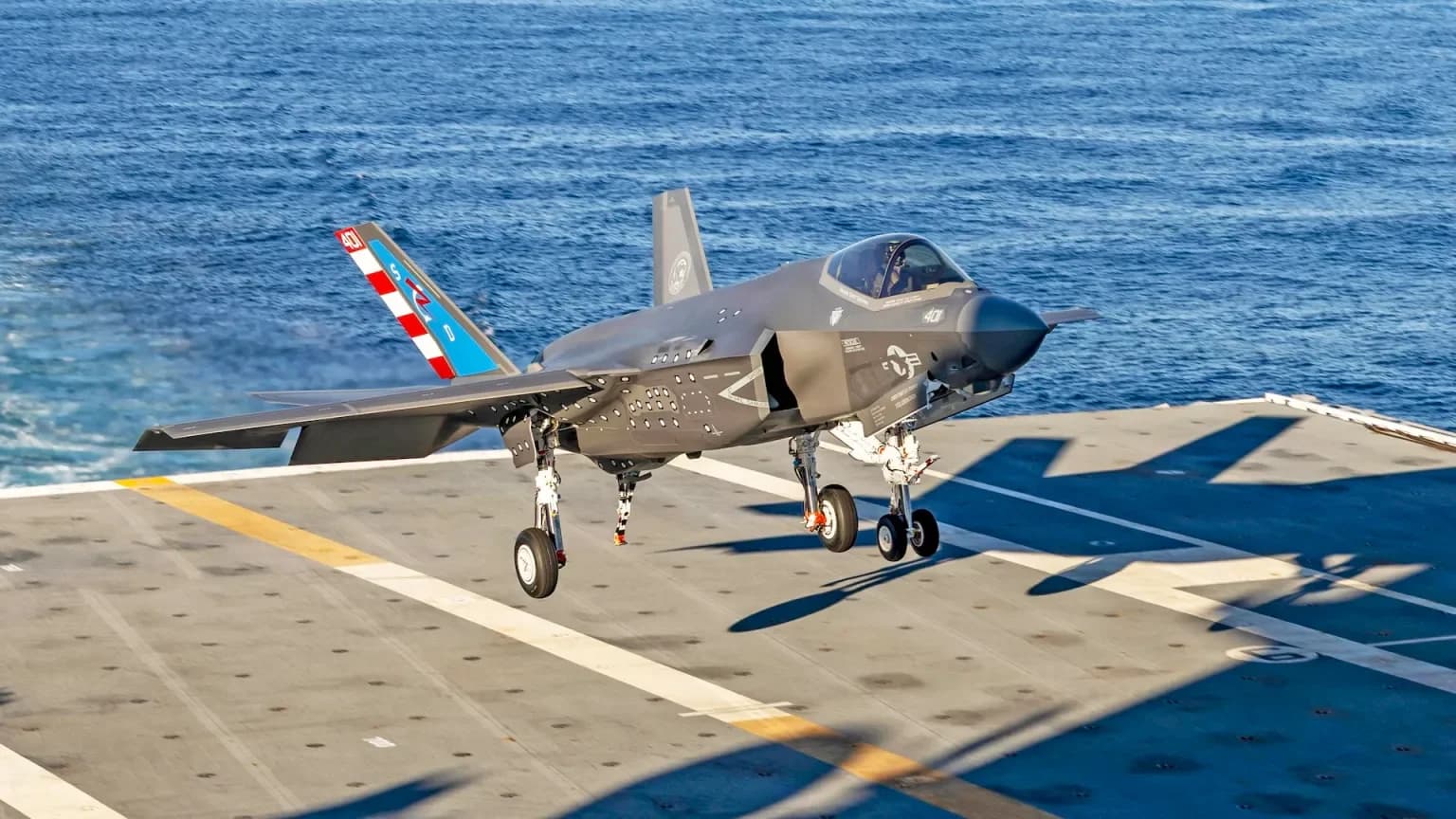
A U.S. Navy F-35C has performed the type's first arrested landing on a Ford class aircraft carrier, The War Zone reported. The landing took place aboard the future USS John F. Kennedy (CVN 79) in the Western Atlantic on Oct. 13, 2026. It is a huge step in testing the Navy's stealth 5th generation fighter on its newest carrier class, after years of difficulty with the ships' advanced launch and recovery systems.
Two F-35C Lightning II test pilots from Air Test and Evaluation Squadron 23 (VX-23), part of the Naval Air Warfare Center Aircraft Division (NAWCAD), flew out to the ship for an ongoing Aircraft Compatibility Testing (ACT) campaign. A detachment of the F-35 Integrated Test Force (ITF) from Patuxent River is aboard the carrier running the evaluation with a specially instrumented F-35C. The released imagery shows two jets, but only one is seen landing. The other carries inert Joint Direct Attack Munition (JDAM) bombs on external stations.
The Navy took preliminary acceptance of the carrier from Newport News Shipbuilding on Sept. 29, after acceptance trials in August went well. This lets the ship and crew carry out at-sea testing and build proficiency underway while the shipbuilder finishes final systems testing. Formal delivery is scheduled for spring 2027.
The test helps validate how the F-35C works with the Ford class. The class uses electromagnetic catapults and advanced arresting equipment. That allowed to replace the steam-powered launch systems and conventional arresting machinery of the earlier Nimitz class.
ACT assesses how a ship's aircraft launch and recovery equipment performs with Navy aircraft. Engineers use it to see how the ship's systems interact with individual aircraft types and to gather the data needed to validate performance. The instrumented jet lets test teams record data during flight-deck operations, which helps them judge system performance and spot problems that need more evaluation.
Whe should note that the F-35C is built for carrier use. Compared with the Air Force's F-35A, it has larger wings, reinforced landing gear and a heavier tail hook. Launching from a carrier and recovering by arrested landing is central to its role in Navy carrier air wings, which also include Marine Corps F-35Cs.
The first arrested landing shows that Kennedy has reached an important F-35C Lightning II compatibility milestone. It does not show that all testing, certification or operational qualification requirements are complete.